


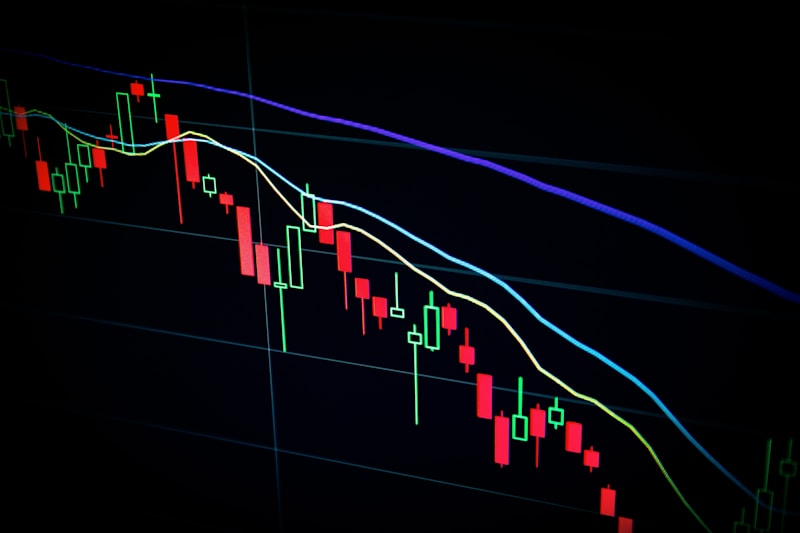
Learning to trade has become increasingly accessible through digital education, but the sheer volume of information can make finding an effective starting point challenging—particularly for beginners with no prior market experience. A structured trading course eliminates this friction by building knowledge systematically, starting with core market dynamics and essential terminology before progressing to analytical tools and risk management. Evest Academy provides a comprehensive curriculum that combines video lessons, interactive quizzes, and practical trading utilities, allowing learners to track their progress according to their experience level. This guide outlines the course curriculum, target audience, learning tiers, and how to maximize your educational journey with the academy.
What Does the Evest Academy Trading Course Offer?
Evest Academy's trading course delivers a progressive learning pathway that guides students through financial markets step by step, avoiding the confusion of jumping between unrelated topics. The curriculum begins with foundational concepts, advances through technical and fundamental analysis, and concludes with risk management and the psychological drivers of trading decisions.
The core philosophy is simple: complex market dynamics are much easier to master when built on a solid conceptual foundation. Technical indicators make little sense without understanding price action, just as evaluating risk requires a working knowledge of position sizing and instrument mechanics.
The academy's recommended learning path features four primary courses arranged from beginner to expert, covering a comprehensive spectrum of trading disciplines.
Learning extends beyond passive video consumption. Evest Academy pairs its video modules with interactive quizzes, enabling students to validate their comprehension before moving on to higher-level concepts.
Learners also have access to dedicated supporting resources, including:
- A financial glossary covering essential trading terminology.
- Educational articles exploring specific market concepts in greater depth.
- Analytical tools to monitor live market data and chart developments.
- Trading calculators designed to simplify position sizing and risk calculations.
- Interactive quizzes to review material and measure retention.
These resources allow learners to revisit concepts on demand and connect theoretical lessons directly to platform tools. The objective extends beyond memorizing terms; it is about developing an integrated framework for analyzing markets and making informed financial decisions.
It is vital to distinguish between learning to trade and generating profits. Education builds knowledge and analytical discipline, but it does not guarantee financial returns, as financial markets inherently involve volatility and the risk of capital loss.
Who Is This Trading Course For?
Evest Academy's trading course is designed for anyone seeking a clear, methodical introduction to financial markets—whether starting from scratch or looking to formalize fragmented knowledge.
The course is particularly well-suited for:
- Complete beginners: Individuals who need to understand market structures and asset class differences before tackling charts or execution tools.
- Self-taught traders with knowledge gaps: Learners familiar with basic jargon who need an integrated framework connecting terminology to market analysis and risk management.
- Developing traders: Those with a working knowledge of markets who want to deepen their grasp of technical analysis, fundamental drivers, and risk parameters.
- Structured learners: Anyone looking for a guided, step-by-step curriculum rather than disjointed, scattered online tutorials.
- Financial literacy enthusiasts: Individuals interested in understanding how markets operate for purely educational purposes, without immediate plans to trade active capital.
The academy's progressive structure organizes subjects into cohesive tiers, making it easy to revisit fundamentals whenever gaps arise. Learners can assess their existing knowledge and enter at the level that matches their experience, rather than following a one-size-fits-all track.
Ultimately, getting the most out of the course depends less on past experience and more on having clear learning goals and committing the time needed to study and review the material.
What Will You Learn in the Trading Course?
The curriculum spans theoretical concepts and practical applications, taking learners from market fundamentals through to technical tools and risk management. Each module serves a specific purpose in the student's broader development.
Financial Market and Trading Fundamentals
The curriculum begins by demystifying financial markets, explaining the mechanisms behind them and contrasting the primary asset classes covered across the academy.
Key topics in the foundational tier include:
- An introduction to trading and financial market classifications.
- Equity market dynamics and the forces driving share prices.
- Core forex mechanics and currency market structure.
- Reading and interpreting currency pairs.
- The roles of various market participants in forex.
- The mechanics of buying (going long) and selling (going short).
- Lot sizing and trade volume calculations.
- Understanding pips, pip values, and leverage.
This foundation equips students with a solid mental model of the markets before they interact with complex execution tools. It bridges the gap between casual interest and the technical vocabulary required for subsequent modules.
Trading Tools and the Platform Interface
Once market basics are clear, learners explore the platform features and analytical tools used to track prices and analyze market data.
The introductory curriculum includes a dedicated walkthrough of the Evest platform, detailing interface navigation, charting tools, and order execution workflows. Walking through the platform helps bridge the gap between theoretical concepts and live execution screens.
Evest Academy also provides practical analytical utilities, such as:
- Interactive charts and technical indicators to track price action, identify chart patterns, and spot market shifts.
- An economic calendar detailing scheduled macroeconomic releases and central bank announcements.
- A lot size calculator to determine exact position sizes aligned with specific risk parameters.
- A margin calculator to verify margin requirements before entering a trade.
- A pip calculator to determine pip values across various instruments and trade sizes.
These tools are not shortcuts to guaranteed returns; they are analytical aids built to support accurate calculations and disciplined decision-making.
Introduction to Technical Analysis
Technical analysis forms a cornerstone of the curriculum, teaching learners how to interpret historical price action using charts.
Evest Academy's intermediate technical analysis course covers a broad range of methodologies, including:
- Core principles of technical analysis.
- Support and resistance levels.
- Japanese candlestick patterns.
- Trendlines and market structure.
- Classic chart patterns.
- Breakouts and fakeouts.
- Fibonacci retracement and extension tools.
- Price channels.
- The Wyckoff method.
- Supply and demand zones.
- Momentum indicators and oscillators.
This variety introduces multiple perspectives for interpreting price action. Arranging these topics into a sequential path ensures students master core concepts before attempting to synthesize complex technical indicators.
For example, identifying multi-candle patterns and trend channels is far more intuitive once a student understands baseline price action and structural horizontal levels.
Importantly, technical analysis deals in probabilities rather than certainties. It must always be applied alongside sound risk parameters and an awareness of broader market conditions.
Risk Management
Risk management is an essential pillar of trading education; analytical proficiency alone cannot protect a portfolio from unexpected market swings.
Evest Academy dedicates an advanced course specifically to risk management and trading psychology, emphasizing emotional discipline and capital preservation.
Key areas covered in this module include:
- Sizing positions relative to total portfolio equity and defined risk thresholds.
- Strategic placement of stop-loss orders.
- Calculating and optimizing risk-to-reward ratios.
- The compounding impact of leverage on trading outcomes.
- Psychological biases that derail objective decision-making.
- Maintaining emotional discipline during periods of market turbulence.
These lessons train students to focus on downside scenarios and potential losses before considering profit targets.
Risk management also highlights the structural mechanics of leveraged instruments, where magnified exposure can accelerate losses. Consequently, risk control is not treated as an afterthought, but as the connective tissue linking technical analysis to capital preservation.
The objective is to develop a disciplined approach to assessing risk before placing a trade, rather than offering false promises of capital immunity.
Practice and Practical Application
Watching videos alone does not build trading competence; true comprehension requires hands-on application, testing, and continuous review.
Evest Academy integrates video modules with interactive quizzes and platform utilities to create an active learning environment.
Each lesson includes a comprehension quiz requiring a 70% passing score before the student can mark the module complete and proceed along the structured path.
Quiz results pinpoint specific areas that require review, discouraging students from simply binge-watching material without fully absorbing it.
The platform automatically tracks learning progress across devices, allowing students to pause and resume their studies seamlessly.
Learners also have access to an AI-powered assistant that delivers on-demand explanations of trading terms, strategies, and market events based on the academy's verified curriculum.
This setup fosters a continuous loop of learning, testing, and reviewing—while reinforcing that educational simulations do not eliminate the real risks of live market trading.
Evest Academy Course Levels
Evest Academy structures its primary curriculum into four progressive tiers, guiding students from market fundamentals through to advanced risk protocols and behavioral finance.
This tiered framework provides a clear roadmap of what to study and when, ensuring learners master prerequisite concepts before moving forward.
Level 1: Beginner
The Beginner tier focuses on market basics, equity dynamics, and forex fundamentals across 15 structured lessons. It introduces foundational terminology essential for advanced study, including currency pairs, trade volumes, and leverage.
Level 2: Intermediate
The Intermediate tier covers technical analysis and chart interpretation across 11 lessons. Students learn how to identify support and resistance zones, read Japanese candlesticks, map trends, detect chart patterns, and utilize momentum indicators.
Level 3: Advanced
The Advanced tier explores fundamental analysis and macroeconomic indicators across 12 lessons. The curriculum examines how central bank policies, interest rate shifts, employment reports, and geopolitical events drive broader market valuations.
Level 4: Expert
The Expert tier focuses on risk management and market psychology across 6 focused lessons. It addresses capital preservation, emotional discipline, and behavioral biases, helping learners navigate high-stress market environments.
Completing the expert tier signifies the conclusion of an educational program, not a guarantee of market success or profitability.
Furthermore, progressing through higher tiers does not eliminate the need to revisit the basics; advanced strategies rely heavily on foundational concepts. The curriculum provides a roadmap to monitor growth, backed by supporting tools to reinforce each phase.
How to Start Your Trading Course with the Academy
Your educational journey begins by evaluating your current market knowledge and defining your personal learning goals.
If you have no prior trading background, the Beginner tier provides the ideal entry point for mastering core concepts before diving into technical charts.
If you already understand market basics, you can review intermediate course outlines to target specific areas for improvement.
Evest Academy offers three free lessons per course with no credit card required. Free platform registration unlocks additional modules based on the access requirements outlined on each course page.
To maximize the value of your selected course, follow this structured study routine:
- Start with foundational lessons: Focus on core principles and avoid advancing until you clearly understand how new topics connect to prior ones.
- Clarify unfamiliar terms: Use the academy's financial glossary to look up unfamiliar jargon encountered during video lessons.
- Complete interactive quizzes: Use end-of-lesson tests to gauge your comprehension and identify topics that need a second review.
- Explore practical tools: Practice using interactive charts, calculators, and the economic calendar to reinforce what you learn.
- Monitor your progress: Use the academy's dashboard to track completed modules and see what remains in your curriculum path.
All course content is available across desktop and mobile devices, syncing progress automatically under a single account.
Upon finishing all lessons and passing the associated quizzes according to platform requirements, students earn a certificate of completion.
This certificate should be viewed as formal proof of finishing an academic curriculum—not as an industry license or a guarantee of trading success.
This structured approach removes guesswork, giving learners a clear roadmap of what to study, how to review, and where to head next.
What Comes After the Basics?
Once you master the fundamentals, the next phase involves broadening your knowledge to interpret price behavior and market-moving catalysts.
The natural next step is technical analysis, where you learn to analyze chart patterns and technical indicators, followed by fundamental analysis.
Fundamental analysis evaluates how macroeconomic developments—such as interest rate decisions, monetary policy shifts, and key economic reports—impact asset valuations.
The fundamental analysis course covers crucial topics, including:
- The role of central banks in financial markets.
- How to interpret the economic calendar.
- The impact of non-farm payrolls and employment data on market volatility.
- The direct relationship between inflation data and asset pricing.
- Central bank interest rate decisions and monetary policy cycles.
- How macroeconomic shifts and geopolitical developments influence markets.
Combining technical and fundamental analysis provides a well-rounded perspective on market dynamics, rather than analyzing price action in a vacuum.
From there, learners advance to risk management and psychological discipline, addressing the behavioral habits needed to navigate market uncertainty and volatility.
The academy supplements its core courses with regular blog insights, specialized guides, recorded webinars, analytical tools, and an AI-powered assistant.
These resources serve as a natural extension of the core curriculum, allowing students to revisit nuanced concepts or explore specialized topics in greater detail.
Trading education requires ongoing study and continuous review; finishing a course marks the beginning of an educational journey, not an end to learning or a guarantee of market performance.
How Supporting Educational Resources Maximize Course Value
A structured curriculum becomes significantly more effective when backed by reference materials that allow students to clarify terms and concepts on the fly.
Evest Academy integrates several supplementary tools directly alongside its core courses, including:
- A financial glossary: Featuring over 120 definitions, this tool helps learners look up complex trading terms during their studies.
- In-depth articles: Educational guides covering advanced technical setups, fundamental drivers, risk models, and behavioral psychology.
- Analytical tools: Live charting software, technical indicators, and economic calendars to monitor real-time market developments.
- An AI assistant: A conversational tool that delivers instant, context-aware answers to trading questions based on the academy's verified materials.
- Recorded webinars: Archive sessions providing visual walkthroughs of various trading methodologies and market dynamics.
- Cross-device progress tracking: Automatic synchronization across desktop and mobile devices so learners can pick up right where they left off.
These resources connect abstract concepts directly to practical applications, such as indicator interpretation, news analysis, and position-size calculations.
While supplementary materials add significant depth, the structured courses remain the core roadmap, guiding students through their studies in a logical, step-by-step sequence.
Why Structured Learning Matters Before You Trade
A structured curriculum brings order to learning, which is critical in a field filled with technical jargon, complex mechanics, and multifaceted financial risks. While anyone can pick up isolated concepts from random videos or articles, mastering trading requires an integrated framework where topics build logically from initial fundamentals to advanced execution.
Key advantages of following a structured trading curriculum include:
- Building a comprehensive foundation: A guided path ensures you understand market structures and basic terminology before tackling complex analytical indicators.
- Developing balanced analytical skills: Progressing methodically from market basics to technical and fundamental analysis fosters a balanced view of price action.
- Mastering risk principles early: Structured learning introduces position sizing, leverage limits, and stop-loss strategies well before live capital is committed.
- Validating comprehension: Built-in quizzes help verify your understanding and highlight topics that need review, preventing passive, ineffective studying.
- Avoiding common beginner pitfalls: A clear educational path stops students from skipping ahead to advanced setups before mastering the fundamentals—a common mistake that leads to misinterpreting data and misusing tools.
Following Evest Academy's structured path sets clear educational milestones, ensuring every new module builds on the knowledge gained in the last. While comprehensive education cannot eliminate market volatility or the risk of loss, it provides the structured preparation needed to evaluate financial markets with clarity and discipline.