


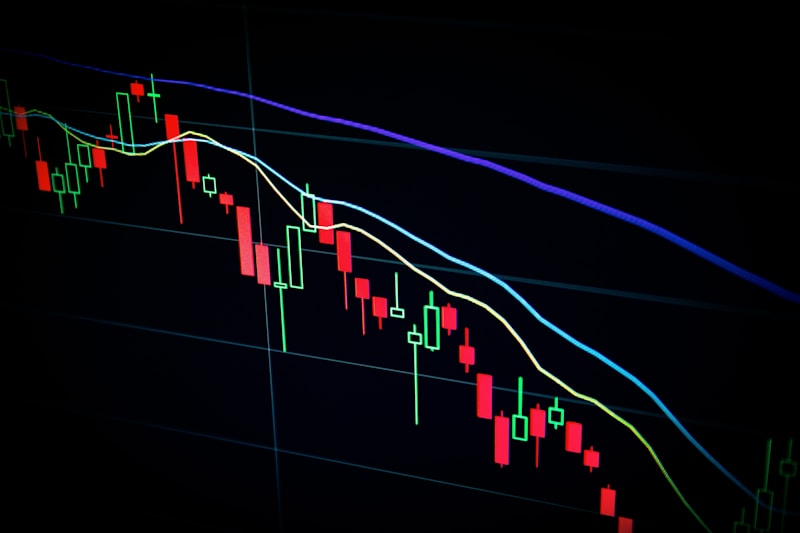
Learning trading from scratch begins with understanding how financial markets operate and how prices move, long before worrying about complex strategies or profits. A beginner must first grasp essential terminology, explore different asset classes, learn chart reading, and distinguish between technical and fundamental analysis before gradually transitioning to risk management and live execution. A structured curriculum, such as Evest Academy Pro, helps organize this journey through four progressive courses that start with market fundamentals and advance through risk management and trading psychology, supported by quizzes, a financial glossary, and interactive tools. Early on, the objective is not to execute as many trades as possible, but rather to build a solid knowledge base that fosters informed decision-making and separates methodical analysis from guesswork.
What Is Trading and Why Should You Learn It?
Trading involves buying and selling financial instruments and assets—such as stocks, currencies, and commodities—to capitalize on price fluctuations. However, simply knowing how to click a buy or sell button does not mean you understand trading. A true trader must comprehend the underlying market dynamics, the macroeconomic drivers behind price shifts, how to interpret analytical data, and the inherent risk attached to every decision. Therefore, foundational education must prioritize understanding before execution. A beginner who understands why a market moves and how to quantify risk stands on far firmer ground than someone who merely knows how to navigate a software interface.
Defining Trading and Its Role in the Modern Economy
Financial markets play an indispensable role in the global economy. They provide corporations, governments, and institutional investors with essential access to capital and liquidity, while facilitating the continuous transfer of ownership and risk among market participants. Retail traders engage with price movements according to their individual styles, goals, and chosen timeframes. Trades may last mere minutes or span several weeks, yet the underlying principle remains constant: making calculated decisions in an environment of probabilities, never certainties.
Studying trading equips you with a deeper understanding of how global financial systems function, what catalysts drive asset valuations, how economic data and breaking news ripple through markets, how to read price charts, and how to assess risk exposure before deploying capital. Consequently, the true value of trading education lies not in learning operational mechanics, but in developing a structured, disciplined framework for processing financial information.
Advantages and Drawbacks of Trading
Trading attracts aspiring market participants for several reasons, including:
- Flexibility: The ability to study, analyze, and monitor global markets entirely online.
- Market Diversity: Broad access to an extensive range of asset classes and financial instruments.
- Autonomy: Freedom to select the specific asset, timeframe, and analytical style that best fits your personal schedule and preferences.
- Skill Development: Continuous improvement in quantitative reasoning, data analysis, and decision-making under uncertainty.
Conversely, several critical risks and challenges must be acknowledged:
- Price Volatility: Markets can experience sudden, sharp price swings over very short horizons.
- Leverage Risks: While leverage can magnify potential gains, it equally amplifies potential losses.
- Psychological Pressure: Making frequent financial decisions under market uncertainty can trigger costly behavioral and emotional errors.
- No Guaranteed Outcomes: Even high-quality analysis and extensive preparation only shift probabilities; they never guarantee a profitable trade.
Trading should therefore be approached as a demanding discipline requiring ongoing study, emotional control, and rigorous risk parameters—never as a guaranteed shortcut to fixed income or rapid wealth.
Trading vs. Long-Term Investing
| Comparison Point | Trading | Long-Term Investing |
|---|---|---|
| Time Horizon | Ranges from seconds, hours, and days to several weeks | Centers on holding assets across months, years, or decades |
| Objective | Capitalizing on short-to-medium-term price swings | Compounding wealth and long-term capital appreciation |
| Primary Analysis | Heavily reliant on price action and technical analysis | Centered primarily on fundamental analysis, valuation, and financial health |
| Monitoring Frequency | Demands frequent, active tracking of market movements | Typically relies on periodic, less frequent portfolio reviews |
| Analytical Flexibility | Can integrate technical indicators with economic catalysts | Can blend fundamental screening with technical entry points |
Types of Financial Markets You Can Trade
One of the first concepts a beginner must realize is that "the market" is not a single monolith. Multiple distinct financial markets exist, each defined by unique liquidity conditions, operational hours, drivers, and risk profiles. Beginners do not need to master every market at once; building a broad overview before specializing in a single asset class is the most effective approach.
Key markets accessible to retail traders include:
- Stock Market: Trading shares of publicly listed companies.
- Forex Market: Buying and selling global currency pairs.
- Commodities Market: Physical raw materials such as gold, crude oil, and agricultural products.
- Cryptocurrency Market: Digital decentralized assets known for elevated volatility.
- Derivatives Markets: Financial contracts whose value derives from an underlying benchmark, asset, or index.
The Stock Market: Mechanics and Risks
A share of stock represents fractional equity ownership in a publicly traded corporation. Equity valuations fluctuate based on company earnings reports, revenue expansion, sector performance, broader macroeconomic trends, and shifts in investor sentiment. Equities are also vulnerable to unexpected corporate announcements or sudden shifts in market guidance, meaning prices can diverge sharply from a trader's expectations.
Mastering the stock market requires analyzing a company's underlying business model, competitive moat, financial health, and industry dynamics, alongside technical studies of price action, liquidity, and historical volatility. Beginners must learn to distinguish between a company's current share price and its intrinsic fundamental valuation, avoiding the temptation to judge an asset's quality purely on short-term price movements.
The Forex (Foreign Exchange) Market
The foreign exchange market operates through the simultaneous quotation of currency pairs, such as the euro against the US dollar (EUR/USD). Currency valuations respond to central bank monetary policies, benchmark interest rates, inflation metrics, GDP growth, and geopolitical developments. The forex market is renowned for its immense daily liquidity and near-continuous 24-hour trading across global financial hubs.
However, deep liquidity does not equate to low risk, particularly given the widespread use of high financial leverage. Beginners must understand key concepts like base versus quote currencies, pips, bid-ask spreads, and macroeconomic monetary drivers. Evest Academy Pro introduces forex and currency mechanics comprehensively within its foundational Financial Markets course.
The Commodities Market: Gold, Oil, and Metals
Commodity trading covers physical raw materials such as precious metals (gold, silver) and energy products (crude oil, natural gas). Commodity prices respond primarily to supply-and-demand balances, global production volumes, inventory reports, geopolitical disruptions, inflation expectations, and international macroeconomic activity.
It is critical not to treat all commodities identically. The catalysts driving precious metals differ significantly from energy markets. Gold frequently trades as an inflation hedge and safe-haven asset sensitive to real interest yields, whereas crude oil is heavily driven by OPEC+ production quotas, commercial storage levels, and worldwide manufacturing demand.
The Cryptocurrency Market
Cryptocurrencies are characterized by substantial volatility, often recording double-digit price swings within narrow windows. Unlike traditional equities or fiat currencies, digital assets operate on decentralized blockchain networks, feature distinct regulatory landscapes, and display fragmented liquidity across global exchanges.
Trading digital assets requires a thorough appreciation of their inherent risk. Elevated volatility should never be mistaken for easy profits. While Evest Academy Pro covers cryptocurrency concepts within its educational financial glossary, its core curriculum maintains a primary focus on traditional, established asset classes.
Trading Basics for Beginners: Core Concepts and Terminology
Before testing any technical setup, beginners must learn the specialized lexicon of the financial markets. Trading is rich in industry-specific jargon, and misinterpreting a single term can lead to analytical mistakes or costly execution errors.
Essential terms every new trader must master include:
- Bid and Ask Prices: The precise quotes at which a market participant can sell (bid) or buy (ask) an asset.
- Spread: The difference between the buy (ask) price and the sell (bid) price.
- Pip: The standardized minimal unit of price measurement used in currency trading.
- Lot Size / Position Size: The specific volume or exposure deployed in a trade.
- Financial Leverage: A broker facility that allows traders to control larger market positions with a smaller upfront capital deposit.
- Margin: The collateral balance required in an account to open and maintain a leveraged position.
- Stop Loss: A predefined order designed to automatically liquidate a trade and cap potential losses.
To bridge this knowledge gap, Evest Academy provides a comprehensive glossary of 126 financial terms, ensuring beginners can clarify unfamiliar terminology as they advance through their studies rather than compounding conceptual errors.
Leverage and Margin
Financial leverage enables a trader to gain market exposure that exceeds their deposited capital. While leverage can appear attractive due to its capacity to amplify nominal returns on modest price changes, it is inherently a double-edged sword: it magnifies drawdowns just as quickly as it multiplies gains. Margin is simply the requisite collateral reserved by the broker to hold that leveraged trade open.
Novice traders should never view leverage simply as a vehicle to supercharge profits, but rather as an element that increases downside risk. The greater your market exposure relative to equity, the smaller the adverse market move required to significantly damage or deplete your account balance.
Market Orders and Execution Types
Orders are formal instructions submitted to a brokerage to execute a trade under specific conditions. A market order buys or sells immediately at the best available price. A stop-loss order sets an automated price trigger to exit an open position if the market moves unfavorably, enforcing downside control. Conversely, a take-profit order sets an automated target to close the trade once a designated profit threshold is hit.
Importantly, conditional orders do not guarantee execution under all market conditions; extreme volatility, illiquidity, and price slippage can affect realized outcomes. Understanding order types within a comprehensive risk framework prevents treating technical order tools as absolute safeguards against loss.
Technical vs. Fundamental Analysis
Technical analysis involves evaluating historical price action, chart structures, candlestick formations, and mathematical indicators to identify prospective patterns and scenarios. Fundamental analysis, on the other hand, evaluates the underlying economic drivers of asset value, including interest rate decisions, corporate balance sheets, employment data, and macroeconomic reports.
Evest Academy Pro addresses both disciplines through dedicated learning modules: an 11-lesson Technical Analysis course and a 12-lesson Fundamental Analysis course, built upon a foundational introduction to financial markets. Studying both approaches equips traders with a multi-dimensional perspective, while reinforcing the reality that all analysis deals in shifting probabilities rather than certain outcomes.
How to Start Learning Trading
Once foundational concepts are understood, learners can transition toward practical application. However, moving to practical execution does not mean immediately committing real money. The primary objective is to verify that you can synthesize and apply theoretical concepts in live market conditions without capital risk.
Follow this structured sequence to get started:
- Master core market fundamentals and trading terminology.
- Study the principles of technical and fundamental analysis.
- Learn capital management rules and risk-control protocols.
- Familiarize yourself with a trading platform and order entry mechanisms.
- Open a risk-free demo account and execute practice trades.
- Maintain a trading journal to log decisions and evaluate errors.
- Transition gradually to live execution only after demonstrating disciplined risk control.
Adhering to this step-by-step roadmap ensures practical application remains a reinforcement of structured learning, allowing beginners to confirm competency before moving to the next stage.
Choosing the Right Broker
Selecting a brokerage firm is an entirely separate decision from choosing an educational academy. When evaluating a broker, you must verify regulatory compliance, licensing jurisdictions, available trading instruments, fee schedules, execution speed, and the responsiveness of customer support.
Essential criteria to examine include:
- Regulatory status and top-tier jurisdictional licensing.
- Transparent fee structures, spreads, and overnight commissions.
- Asset selection and available trading instruments.
- Quality, stability, and speed of trade execution.
- Trading platform usability and analytical tools.
- Secure, verified deposit and withdrawal options.
- Professional and accessible technical support.
Never base your broker selection solely on aggressive promotional marketing or brand recognition. High-quality educational content does not automatically mean an associated financial services provider is suitable for your specific trading needs; every operational entity requires independent scrutiny.
Opening and Practicing on a Demo Account
A demo account provides simulated virtual funds, allowing you to master trading platform functionality and test order entry without risking real capital. Its core utility lies in operational training and conceptual validation: beginners can practice opening and closing positions, setting stop losses and take profits, applying chart indicators, and logging results.
However, a demo account cannot replicate the psychological pressures of live trading. Decisions made with simulated capital feel completely different from decisions made when hard-earned money is on the line. Use demo accounts to build technical competence, not as a guarantee of future live-market profitability.
Developing a Trading Plan and Managing Capital
A trading plan establishes the explicit, objective rules governing your market decisions. It should define the specific markets you trade, precise entry and exit criteria, required analytical confirmations, maximum risk per trade, and a routine for post-trade reviews.
Capital management focuses on controlling position sizes so that no individual trade significantly damages overall account equity. There is no one-size-fits-all risk percentage; appropriate exposure depends on available capital, personal risk tolerance, market volatility, and experience level.
Common Trading Strategies for Beginners
Once the fundamentals are secure, beginners can explore common trading styles. The goal at this stage is to understand how these approaches differ, not to trade them all simultaneously. Selecting an appropriate strategy depends on your available screen time, personal psychology, market choice, and risk tolerance. A strategy suited to someone monitoring charts all day will not work for someone with limited daily availability.
Day Trading
Day trading involves opening and closing all positions within the same trading session, holding no trades overnight. This style requires continuous screen time, rapid decision-making, and the ability to process multiple intraday setups. Because decisions are concentrated within short timeframes, day trading often generates elevated psychological stress.
Beginners should avoid gravitating toward day trading simply on the assumption that it delivers faster returns. More frequent trading opportunities also mean more opportunities to make cognitive and strategic mistakes.
Swing Trading
Swing trading aims to capture multi-day price swings, with positions typically held from several days to a few weeks. Swing traders seek to capitalize on intermediate trends and market momentum, utilizing daily or four-hour charts alongside key support and resistance levels.
This approach requires less constant screen monitoring than day trading and accommodates a healthy blend of technical setups and fundamental catalysts. However, positions remain exposed to overnight gaps and unexpected weekend news events.
Position Trading (Long-Term Trading)
Position trading relies on macro trends that unfold over months or even years. This style places primary emphasis on fundamental analysis, economic cycles, interest rate trends, and corporate valuations, filtering out daily market noise.
Even though position trading operates on broad horizons, it does not eliminate risk. Strict capital management and appropriate position sizing remain essential, regardless of trade duration or analytical conviction.
Risk Management and Trading Psychology
A trader can possess thorough market knowledge and sound analytical skills yet still fail due to deficient risk management or emotional decision-making. For this reason, risk control and psychology form the cornerstone of professional trading education. Evest Academy Pro dedicates an entire 6-lesson course to portfolio allocation, stop-loss strategy, intraday risk control, and psychological analysis—demonstrating that risk management is a core pillar, not an afterthought.
The Importance of Risk Management in Capital Preservation
Risk management begins before an order is ever submitted. A disciplined trader calculates potential downside exposure, defines the exact invalidation point for the analytical idea, sizes the position appropriately relative to account equity, and accounts for the magnifying effect of leverage.
No single trade should ever threaten your ability to stay in the market. Stop losses and position sizing must be treated as structural requirements of your trading plan, rather than reactive emergency measures deployed only after an adverse move occurs.
Common Psychological Traps and How to Avoid Them
Beginners frequently fall victim to predictable behavioral and psychological traps:
- Fear of loss, leading to premature exits that violate the trading plan.
- Greed and overleveraging after an initial sequence of winning trades.
- Revenge trading to recover losses rapidly after a drawdown.
- Arbitrarily increasing position sizes following a string of positive results.
- Modifying parameters mid-trade without an objective analytical reason.
- Strategy hopping across different trading systems after just a few losing trades.
Eliminating human emotion entirely is impossible. The solution lies in establishing objective, codified rules that limit emotional interference, paired with consistent reviews of your trading behavior.
Building Discipline and Patience
Discipline means systematically executing your plan according to predefined rules. Patience means waiting for valid setups to appear rather than forcing trades out of boredom or a desire for action. Maintaining a comprehensive trading journal—logging entry and exit prices, risk-reward ratios, analytical rationales, and emotional states—is one of the most effective habits you can build.
Journaling enables you to pinpoint recurring weaknesses, helping you determine whether poor results stem from flawed analysis, faulty execution, or improper risk sizing, rather than abandoning your entire approach after every normal drawdown.
How to Choose the Right Trading Platform
Proficiency with trading software is an essential operational requirement, but the platform alone does not make a trader successful. When selecting a platform and provider, evaluate regulatory standing, software responsiveness, transaction costs, available instruments, execution quality, fund security, and client support.
Always verify that the operating entity holds appropriate regulatory licenses in your jurisdiction before depositing capital. Additionally, distinguish between an educational academy and a financial brokerage. An academy provides structured training and market knowledge, whereas a broker provides financial execution services—each requiring separate, independent evaluation.
Advanced Educational Resources for Learning Trading
Learning does not stop once you understand foundational concepts. Financial markets continuously evolve, regulatory frameworks change, and new analytical tools emerge. However, pursuing advanced topics should only occur after the basics are thoroughly mastered; studying complex methodologies with unresolved foundational gaps leads to confusion rather than skill.
Specialized Courses and Books
Reputable books and dedicated courses can deepen your comprehension of advanced technical models, macroeconomic analysis, and quantitative risk management. However, avoid pursuing advanced concepts merely because they sound sophisticated. If position sizing, pip values, or order types are not second nature, revisiting fundamental principles yields far greater practical value than studying complex derivative setups.
Trading Communities and Discussion Forums
Trading forums and educational communities offer venues for discussing market developments and sharing learning experiences. However, user-generated content varies wildly in accuracy and intent. Always independently verify critical information, distinguish between personal opinions and empirical facts, avoid blindly following trade signals, and cross-reference claims against reputable educational sources.
The Importance of Continuous Learning
Financial markets are dynamic environments shaped by evolving economic policy, financial technology, and algorithmic execution. Traders must continuously refine their knowledge. Artificial intelligence is playing an increasingly prominent role in market research and data analysis, and Evest Academy Pro integrates this technology by providing an AI-driven learning assistant alongside its core courses, glossary, and financial calculators.
Nevertheless, artificial intelligence should support your critical thinking, not replace it. AI tools can organize data and clarify complex concepts rapidly, but they cannot predict future price movements or guarantee trading results.
Learning Trading from Scratch with Evest Academy Pro
For beginners, the central obstacle is rarely a shortage of information; rather, it is knowing what to study first and how to sequence their learning. This is where a structured educational pathway proves invaluable. Evest Academy Pro delivers a comprehensive 4-course curriculum encompassing 44 sequential lessons:
- Financial Markets, Stocks, and Forex Fundamentals: 15 lessons.
- Technical Analysis: 11 lessons.
- Fundamental Analysis: 12 lessons.
- Risk Management and Trading Psychology: 6 lessons.
This structured sequence prevents beginners from jumping into technical indicators and strategies before they understand how underlying markets function. The learning experience goes beyond video lessons, featuring comprehension quizzes, an interactive 126-term financial glossary, practical calculators, fully localized Arabic resources, and a dedicated curriculum segment focused entirely on risk control and behavioral discipline.
Instead of piecing together fragmented information from disparate online sources, learners follow a coherent, progressive curriculum that moves methodically from market foundations to technical charting, macroeconomic evaluation, and the psychological principles essential for consistent decision-making.